
Open Markets' Europe director, Max von Thun, and industrial policy program manager, AudreyStienon, discuss in Competition Policy International's TechREG Chronicle how AI policy narratives framed around the goal of "winning" a global race threaten to undermine the democratic values that this technology is supposed to help defend. Instead, von Thun and Stienon present a vision for an industrial strategy for AI centered on democratic governance as a means of protecting the public interest.
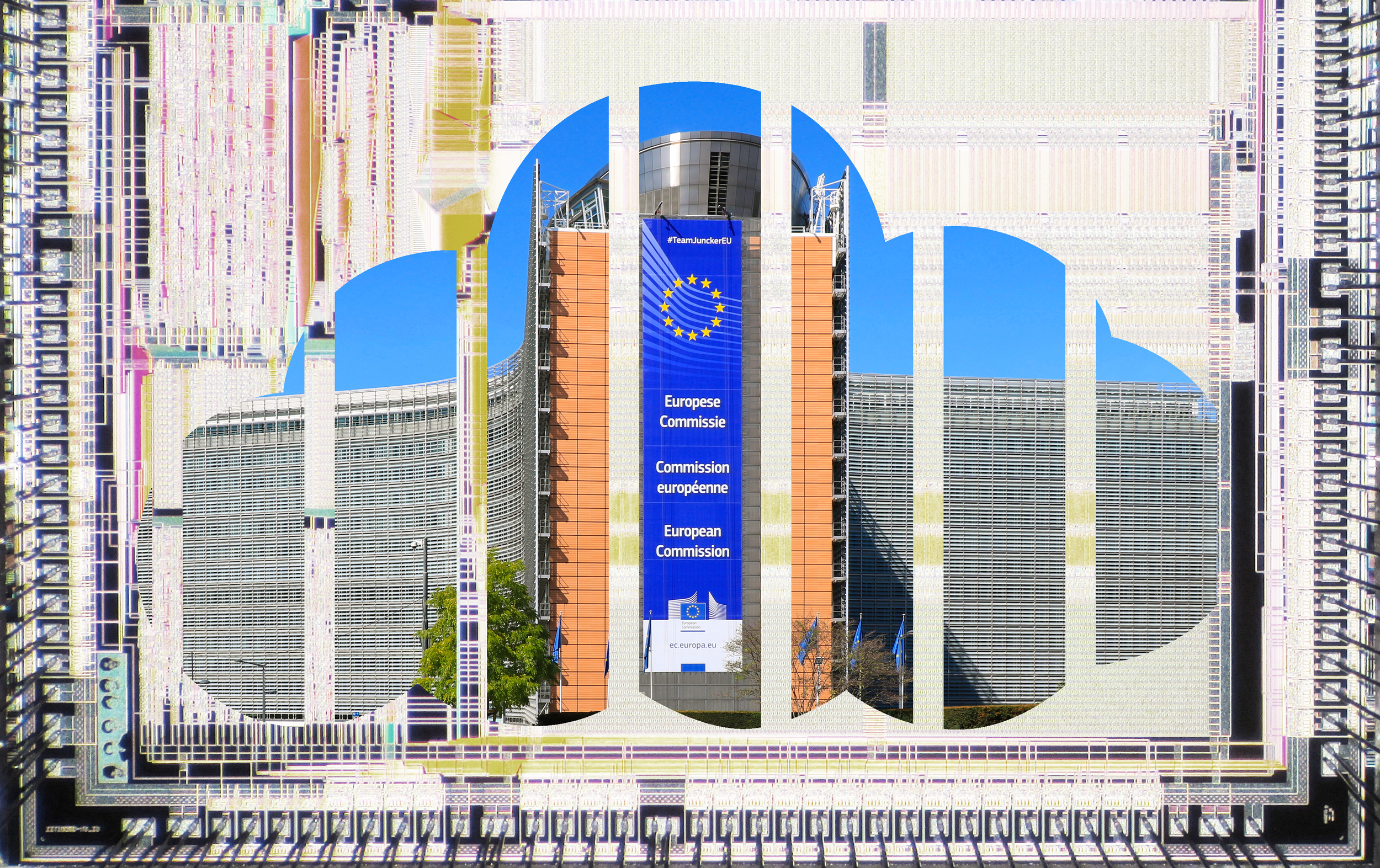
Read MoreThe Open Markets Institute, Balanced Economy Project, Rebalance Now, and SOMO released condemned the European Commission’s decision to allow Google to acquire cloud security firm, Wiz, against expert recommendations for a deeper assessment of the deal.
Read MoreIn this issue, we explore the legal and economic impact of OpenAI’s deals to lock up supply of memory chips.
Read MoreThe Open Markets Institute published a blueprint for Europe’s transition towards an open, competitive, and sovereign cloud market, co-authored by Europe director Max von Thun and EU tech policy fellow George Colville.
Read MoreThe European Commission announced a preliminary finding that Meta may have abused its dominant position by excluding third-party AI assistants from WhatsApp. The Commission intends to impose interim measures to prevent serious and irreparable damage to competition. Such measures could include Meta being forced to open WhatsApp to third-party AI assistants. Max von Thun, Director of Europe & Transatlantic Partnerships at the Open Markets Institute, released a following statement.
Read MoreThe Open Markets Institute released a statement led by Max von Thun, Director of Europe & Transatlantic Partnership a preliminary finding that TikTok’s platform design contributes to addictive use and may violate the European Union’s Digital Services Act (DSA) requiring TikTok to fundamentally change to its business model, including disabling addictive features such as “infinite scroll”.
Read MoreOpen Markets Institute, alongside partner organisations Article 19, the Balanced Economy Project and SOMO, made a detailed submission to the European Commission urging officials to open an in-depth investigation into Google’s proposed acquisition of the cloud security firm Wiz.
Read MoreBarry Lynn condemns travel bans on five European citizens on the theory that their efforts to regulate the behavior of dominant online communications platforms amounted to censorship of American citizens.
Read MoreOpen Markets welcomes the European Commission’s three market investigations on cloud computing services under the Digital Markets Act (DMA).
Read MoreIn a statement from Max von Thun, Open Markets condemns Google’s insufficient remedies, proposed in the EU, regarding its conflicts of interests in the adtech stack.
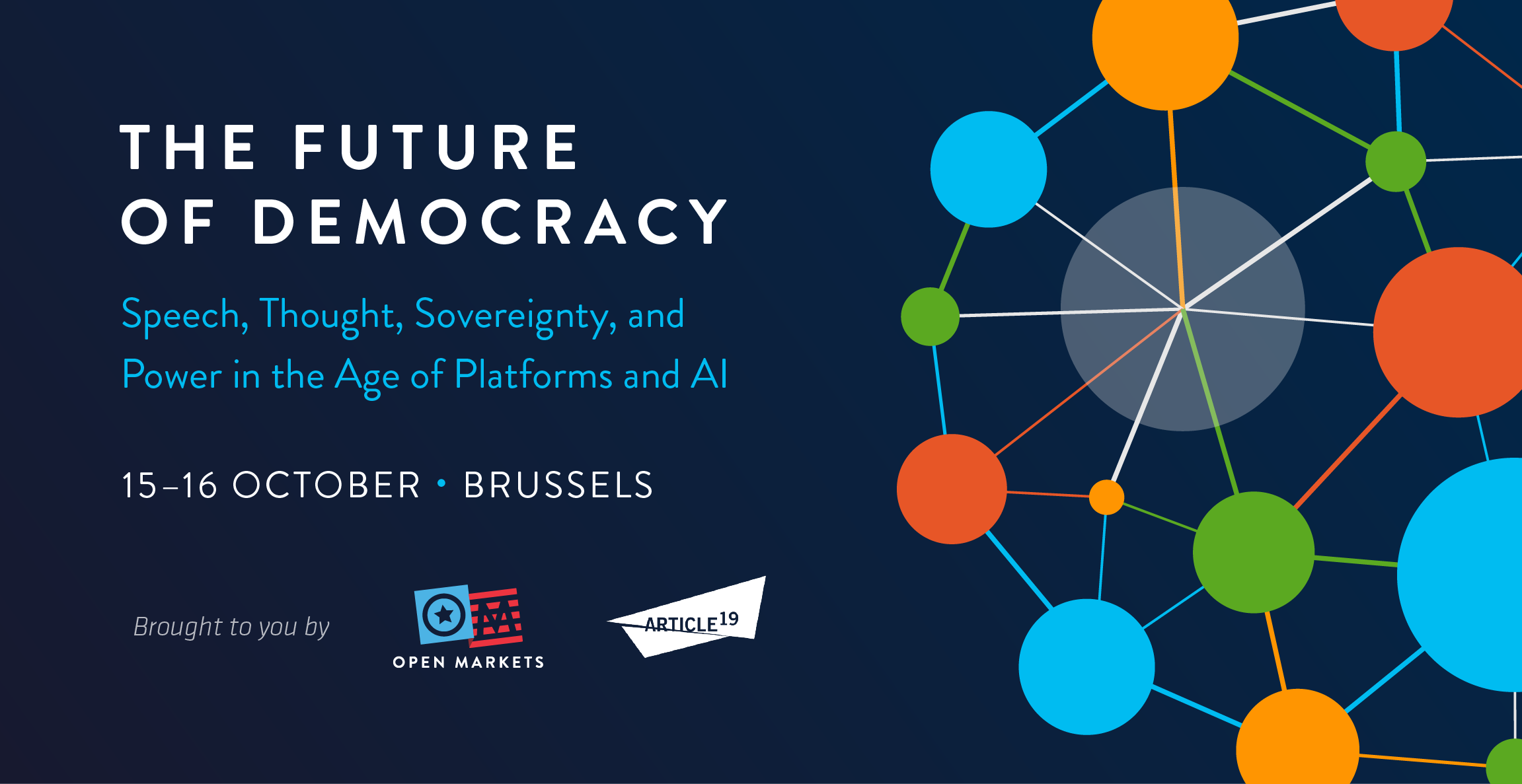
Read MoreThe Open Markets Institute and ARTICLE 19 hosted on October 15th & 16th a convening of high-level leading thinkers, lawmakers, technologists, and advocates who discussed the direct and growing threats to our democracies and basic liberties posed by today’s dominant online communications platforms, the rise of AI, and interference by foreign states.
Read MoreCJL director Dr. Courtney Radsch and Europe director Max von Thun author a brief arguing that dominant U.S. platforms such as Google, Meta and X wield unprecedented power to manipulate political discourse, censor individuals and organizations, and shape the flow of information across Europe, the United States and beyond. At the same time, and in coordination with these corporations, the current U.S. administration has launched an “unprecedented assault” on Europe’s right to regulate these corporations in the public interest.
Read MoreEU tech policy fellow George Colville argues that the AI industry's growing energy demands are unfairly driving up electricity prices for ordinary Americans, with tech giants leveraging their power to shift the cost burden onto taxpayers and households instead of bearing it themselves.
Read MoreOpen Markets Europe Director Max von Thun released a statement in response to the European Commission’s decision to fine Google €3 billion for abusing its dominance in the adtech market and ordering the internet giant to end its illegal conduct.
Read MoreOpen Markets Institute Europe submitted more than 20 pages of recommendations to the European Commission as part of its consultation on updating the EU’s Horizontal and Non-Horizontal Merger Guidelines for the first time in nearly two decades.
Read MoreThe Open Markets Institute submitted a letter to the House Judiciary Committee calling on Congress to reject Big Tech’s fear-mongering campaign against European digital regulation and instead recognize how Europe’s approach strengthens free speech, competition, and democracy.
Read MoreOpen Markets Institute joined over 50 civil society groups in urging the European Commission to stand firm against U.S. interference in the EU’s digital rulemaking.
Read MoreMax von Thun applauds a new report on tech algorithms and misinformation from the UK Parliament’s Science, Innovation and Technology Committee.
Read MoreDirector of Europe & Transatlantic partnerships Max von Thun published an essay in Musk, Power, and the EU: Can EU Law Tackle the Challenges of Unchecked Plutocracy?,warningthat Europe’s reliance on U.S. tech giants like Elon Musk’s companies threatens its sovereignty and democracy, and calls for bold, unified EU action to reclaim control and enforce democratic digital governance.
Read MoreOur webinar was hosted on May 15th, focusing on concentrated corporate control over cloud infrastructure threatens competition, innovation, and national security—and what bold steps are needed to build a more open, resilient digital future.
Read More