
This decision is about European sovereignty and democracy as much as competition or bargaining power.
Read More
This decision is about European sovereignty and democracy as much as competition or bargaining power.
Read MorePolicy and advocacy lead Giorgos Verdi argues that the EU’s Tech Sovereignty Package is a promising step toward reducing Europe’s dependence on U.S. technology firms, but warned it will fall short unless Europe also confronts the market concentration that allows Big Tech to dominate AI, cloud, chips, and digital infrastructure.
Read MoreOpen Markets Institute has welcomed the European Commission's draft merger guidelines as a major, overdue modernisation of EU competition rules – part of a once-in-a-generation review – while also urging the Commission to close loopholes which risk undermining progress.
Read MoreMax von Thun and Claire Lavin argue that merger guideline progress is undermined by the introduction of a bias for scale and efficiency loopholes, which give large corporations more paths to complete a merger.
Read MoreOpen Markets Europe policy analyst George Colville published a piece condemning an aggressive lobbying strategy mounted by Google and Apple to reframe interoperability mandated by the EU’s Digital Markets Act as threats to user privacy and security.
Read MoreThe Open Markets Institute Europe welcomes the preliminary decision by the European Commission to designate Amazon and Microsoft as gatekeepers under the Digital Markets Act (DMA) for their cloud computing services, Amazon Web Services (AWS) and Microsoft Azure.
Read MoreOpen Markets' Europe director, Max von Thun, writes in The Guardian that European Commission’s digital sovereignty plans showcase a disappointing lack of vision.
Read MoreOpen Markets' Europe director, Max von Thun, and industrial policy program manager, AudreyStienon, discuss in Competition Policy International's TechREG Chronicle how AI policy narratives framed around the goal of "winning" a global race threaten to undermine the democratic values that this technology is supposed to help defend. Instead, von Thun and Stienon present a vision for an industrial strategy for AI centered on democratic governance as a means of protecting the public interest.
Read MoreLegal director Sandeep Vaheesan emphasizes that Europe doesn’t need to copy America’s model to be competitive; it should double down on strong competition policy to avoid the economic imbalances and harms baked into the US approach.
Read MoreCJL director Courtney Radsch argues that amid the failure to regulate its own tech firms, the U.S. must not be allowed to undermine European efforts to regain sovereignty over their information systems and resist domination by Big Tech.
Read MoreIndustrial policy program manager Audrey Stienon offers the analysis on Trump’s trade coercion amplifying Big Tech’s long-standing use of trade policy to erode national sovereignty and entrenches corporate power over global digital regulation.
Read MoreCJL director Dr. Courtney Radsch and Europe director Max von Thun author a brief arguing that dominant U.S. platforms such as Google, Meta and X wield unprecedented power to manipulate political discourse, censor individuals and organizations, and shape the flow of information across Europe, the United States and beyond. At the same time, and in coordination with these corporations, the current U.S. administration has launched an “unprecedented assault” on Europe’s right to regulate these corporations in the public interest.
Read MoreMax von Thun, Europe Director at the Open Markets Institute, co-authored a piece with fellow Claire Lavin urging the European Commission to revise its merger guidelines. They argue that competition policy must look beyond prices to safeguard innovation, security, and democracy—ensuring a stronger and more resilient European Union.
Read MoreEurope director Max von Thun co-authors a piece to argue that Europe should focus on protecting democratic values and reinforcing competition laws, rather than pursuing deregulation that could further entrench the dominance of global tech giants.
Read MoreOpen Markets Institute signed onto a letter expressing concerns that trade negotiations could undermine UK parliamentary sovereignty and democracy, particularly in relation to regulations like the Online Safety Act and the Digital Markets, Competition, and Consumers Act.
Read MoreEurope director Max von Thun advocates for stronger political leadership and unity to defend the EU’s digital rulebook against threats from the US administration.
Read MoreOpen Markets Institute’s Europe Director Max von Thun, in collaboration with partners European Policy Centre and Konrad-Adenauer-Stiftung, has published a policy briefing urging European Union leaders to strengthen their resolve in tackling Big Tech despite increasing pressure from the new Trump administration and US tech billionaires.
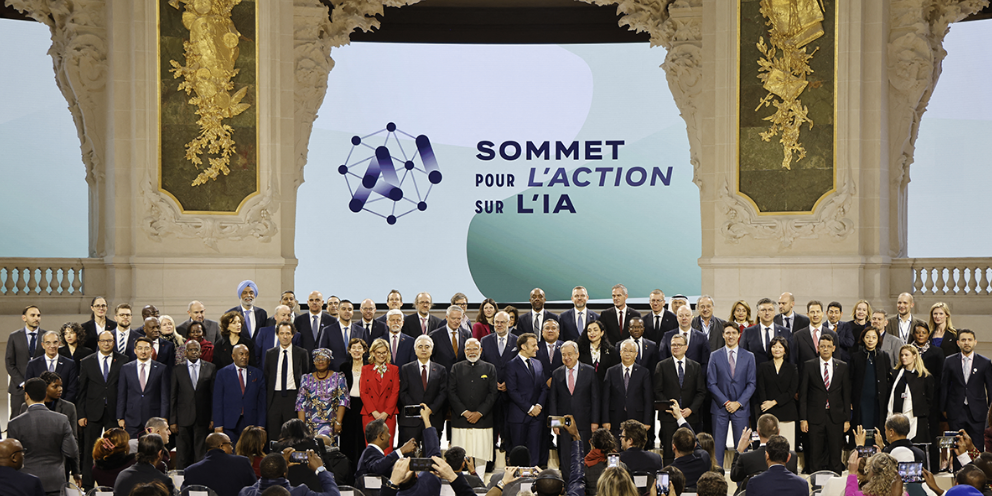
Read MoreSenior EU Fellow Cori Crider expressed how after the AI summit in Paris, Europe must avoid succumbing to Trump's influence and should assert its independence, rejecting appeasement toward the US and Big Tech, which threaten its political and economic sovereignty.
Read MoreEurope director Max von Thun argues that the EU should resist US pressure to ease Big Tech regulations and instead strengthen its digital sovereignty for economic and security reasons.
Read MoreEurope director Max von Thun explains that under President Biden, the EU feels more empowered to regulate big tech aggressively, as the U.S. is pursuing similar antitrust measures, marking a shift from the cautious approach during prior administrations.
Read More