


In a new policy brief, Giorgos Verdi, George Colville, and Dora Wierzbicka set out how Europe’s Tech Sovereignty Package needs to be strengthened in order to effectively reduce Europe’s dependence on foreign digital infrastructure. The Commission’s proposals contain many promising elements, but the package needs to be more ambitious, more rigorous in ensuring it does not in fact benefit existing foreign dominant actors, and more holistic in its treatment of the problem.
Read More
In a new policy brief, George Colville makes the case for urgent updates to the DMA to ensure it can meaningfully tackle cloud concentration. Without such changes, the newfound determination to break apart the cloud oligopoly is likely to make little difference, even after Amazon AWS and Microsoft Azure were designated as gatekeepers under the DMA.
Read More
Join Open Markets Institute and our partners in Paris on Friday, September 25, as we ask how market concentration threatens European democracy and shared prosperity, and what we can do about it.
Read More
Massive corporations like Google should not be able to buy their way out of complying with EU law.
Read More
Open Markets Institute has welcomed the European Commission's draft merger guidelines as a major, overdue modernisation of EU competition rules – part of a once-in-a-generation review – while also urging the Commission to close loopholes which risk undermining progress.
Read More
The Open Markets Institute Europe welcomes the preliminary decision by the European Commission to designate Amazon and Microsoft as gatekeepers under the Digital Markets Act (DMA) for their cloud computing services, Amazon Web Services (AWS) and Microsoft Azure.
Read More
Open Markets Institute and more than 25 civil society organizations are calling on Brussels to reject one of the most sweeping media mergers Europe has been asked to approve.
Read More
By deepening concentration in the film and TV industry, the proposed transaction raises significant competition concerns. CMDG and Open Markets Europe call on the EU Commission to investigate the proposed merger.
Read More
The Open Markets Institute Europe warns that the Commission is failing to seize the full potential of the DMA to address harmful abuses of market power by digital gatekeepers.
Read More
The Open Markets Institute Europe warns that the Commission is failing to seize the full potential of the DMA to address harmful abuses of market power by digital gatekeepers.
Read More
Open Markets' Europe director, Max von Thun, and industrial policy program manager, AudreyStienon, discuss in Competition Policy International's TechREG Chronicle how AI policy narratives framed around the goal of "winning" a global race threaten to undermine the democratic values that this technology is supposed to help defend. Instead, von Thun and Stienon present a vision for an industrial strategy for AI centered on democratic governance as a means of protecting the public interest.
Read More
The Open Markets Institute published a blueprint for Europe’s transition towards an open, competitive, and sovereign cloud market, co-authored by Europe director Max von Thun and EU tech policy fellow George Colville.
Read More
In this issue, we take a closer look at whether Trump tariff policies are the only reason Europe might moderate a key carbon pricing mechanism, which lies at the heart of its climate change policy.
Read More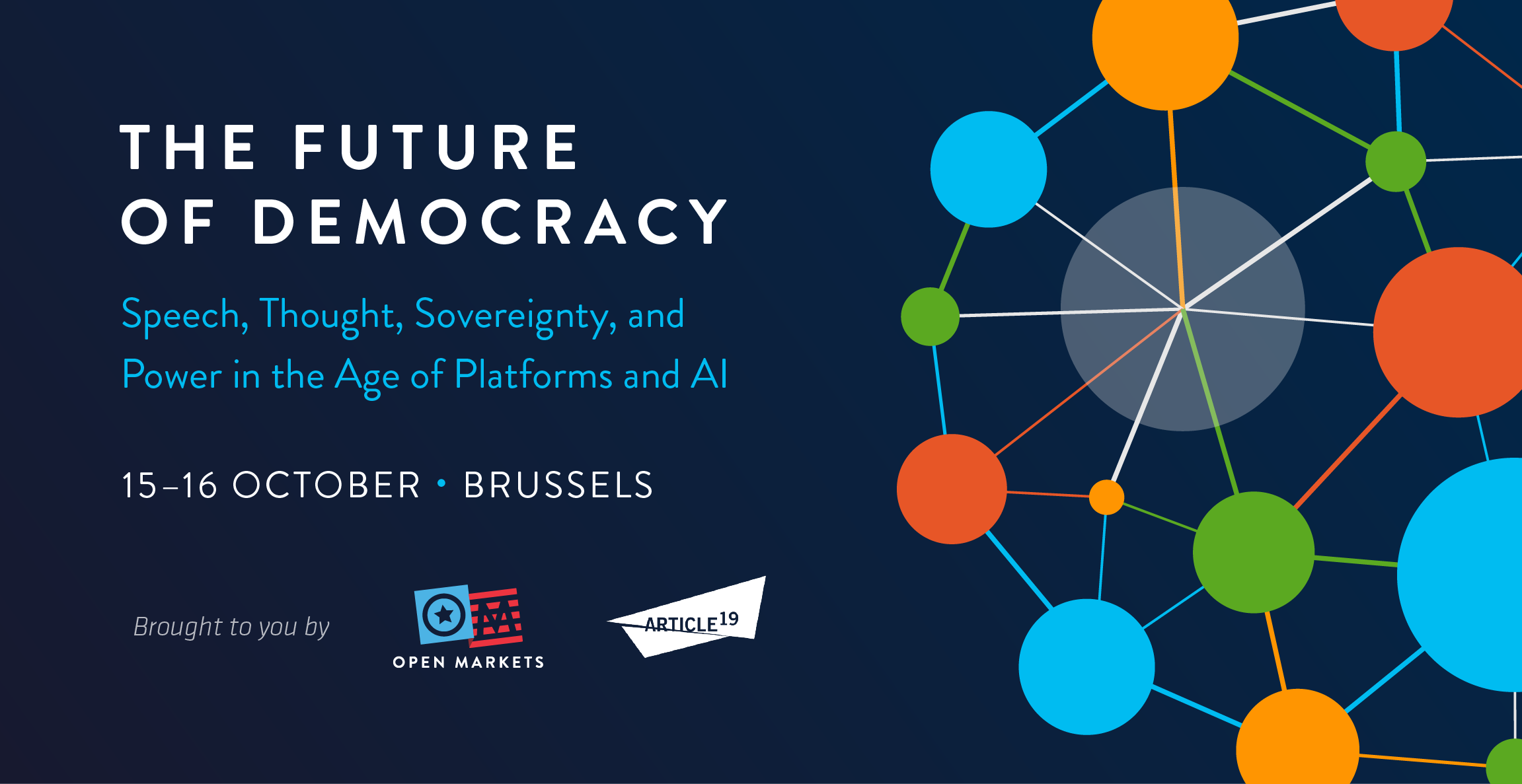
The Open Markets Institute and ARTICLE 19 hosted on October 15th & 16th a convening of high-level leading thinkers, lawmakers, technologists, and advocates who discussed the direct and growing threats to our democracies and basic liberties posed by today’s dominant online communications platforms, the rise of AI, and interference by foreign states.
Read More
The Open Markets Institute warns that the European Commission's Cloud and AI Development Act will fail to achieve its goals unless it directly addresses the dominance of Amazon, Microsoft, and Google in the cloud computing market, advocating for regulatory reforms to ensure fair competition and digital sovereignty in Europe.
Read More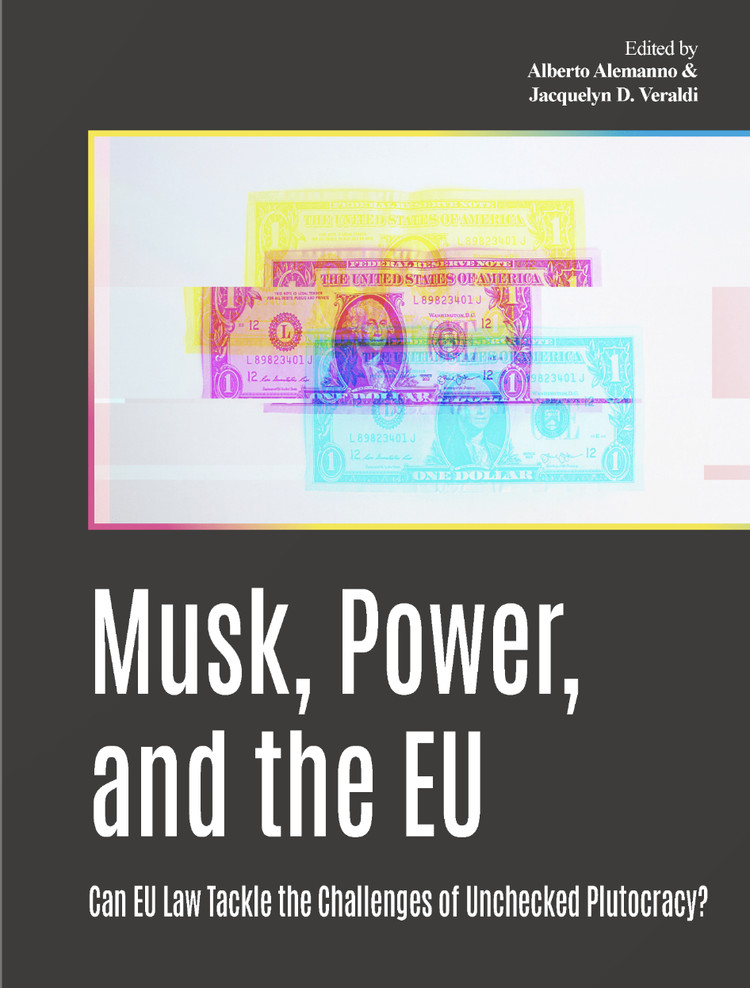
Director of Europe & Transatlantic partnerships Max von Thun published an essay in Musk, Power, and the EU: Can EU Law Tackle the Challenges of Unchecked Plutocracy?,warningthat Europe’s reliance on U.S. tech giants like Elon Musk’s companies threatens its sovereignty and democracy, and calls for bold, unified EU action to reclaim control and enforce democratic digital governance.
Read More
Open Markets Institute’s Europe Director Max von Thun, in collaboration with partners European Policy Centre and Konrad-Adenauer-Stiftung, has published a policy briefing urging European Union leaders to strengthen their resolve in tackling Big Tech despite increasing pressure from the new Trump administration and US tech billionaires.
Read More
Open Markets and civil society partners urge the European Commission to take decisive action against Google’s dominance in the digital advertising sector in order to restore balance and protect the news media and democracy.
Read More
In this issue, we explore how Intel’s recent woes suggest that Biden administration’s CHIPS and Science Act was insufficient and recommend how the next administration must go further in investing in semiconductor manufacturing to protect the country’s national interest.
Read More