
Tech Policy Press - The Next Big Tech Monopoly Could Be Your Personal AI Agent
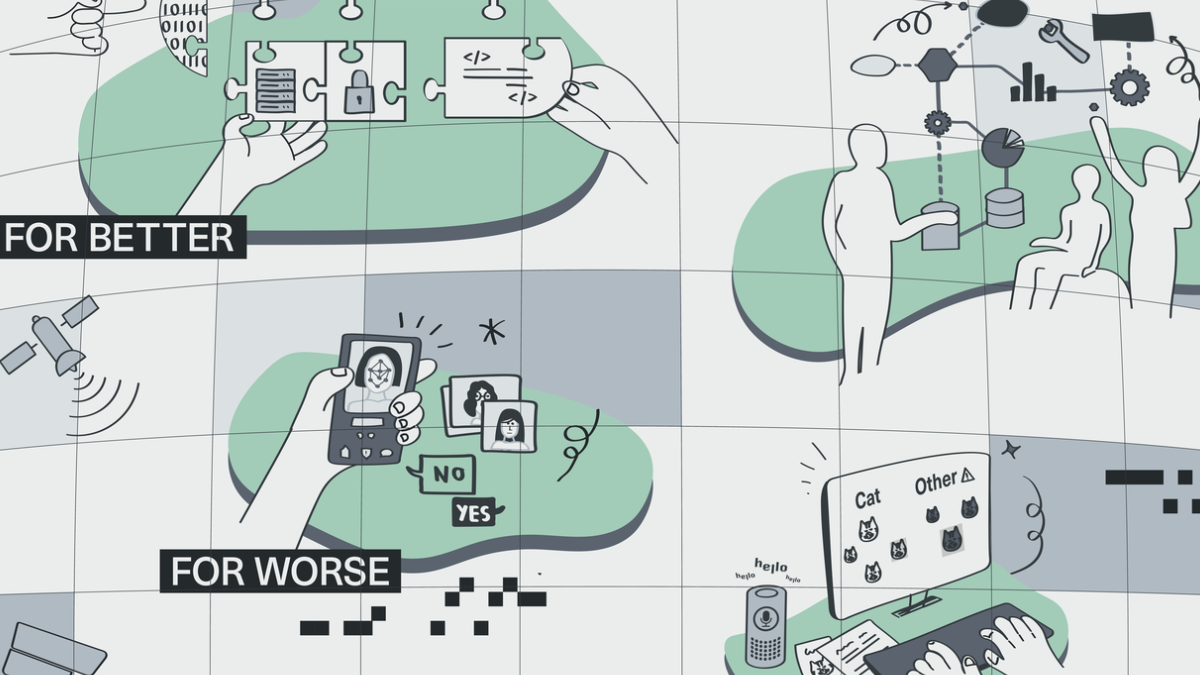
Joudy Bourghli & The Bigger Picture / Better Images of AI
Writing in Tech Policy Press, George Colville sets out why there is a real chance that the personal agentic AI market concentrates around a small number of firms. Drawing on OMI’s new report, ‘Same Gatekeepers, New Gateway’, he explains why this is a threat to our democracies and our economies and details what regulators need to do to protect them from it.
With agentic AI, tech companies are trying to create and monetize a personal assistant that can automate as many daily tasks as possible. They want to become a universal digital intermediary: a single platform through which people buy their groceries and their clothes, book their holidays, interact with government services, control their homes, consume news, and communicate with their friends, family, and communities.
Monopolistic control over this service would vest incredible economic and political power in the hands of private actors with little accountability. In a monopolized future, an AI company becomes the arbiter of what people buy and who they buy it from; selects which news they receive; and shapes how they communicate with their friends, family, and communities.
Most of the world's attention is, understandably, focused on Anthropic and OpenAI. But the digital gatekeepers of old – Google, Meta, and Microsoft in particular – deserve at least as much public (and regulatory) attention.
Each of them is deliberately and determinedly trying to use their existing monopoly-powered ecosystems – spanning hardware, operating systems, browsers, search engines, email, messaging services, social media, productivity software, and online marketplaces – to try to become the dominant provider of agentic AI assistants.
Their existing platforms allow them to instantly put their AI products in front of millions – even billions – of users. They can also tie their agents exclusively to their existing services, integrating them more deeply and efficiently than any competitor can. Anyone who relies on those services is de facto pushed towards their assistant.
The more concentrated the market becomes, the less likely it is that agents will serve the interests of users and the public at large. It is therefore crucial that regulators act, and quickly, to guide the AI market towards openness, interoperability, and user choice. OMI’s report shows what they need to do.
If regulators get this right, the change could be profound. People would have a capable assistant that works for them rather than for a powerful corporation: one that acts across services regardless of who has built it and that is accountable to its user’s interests.